
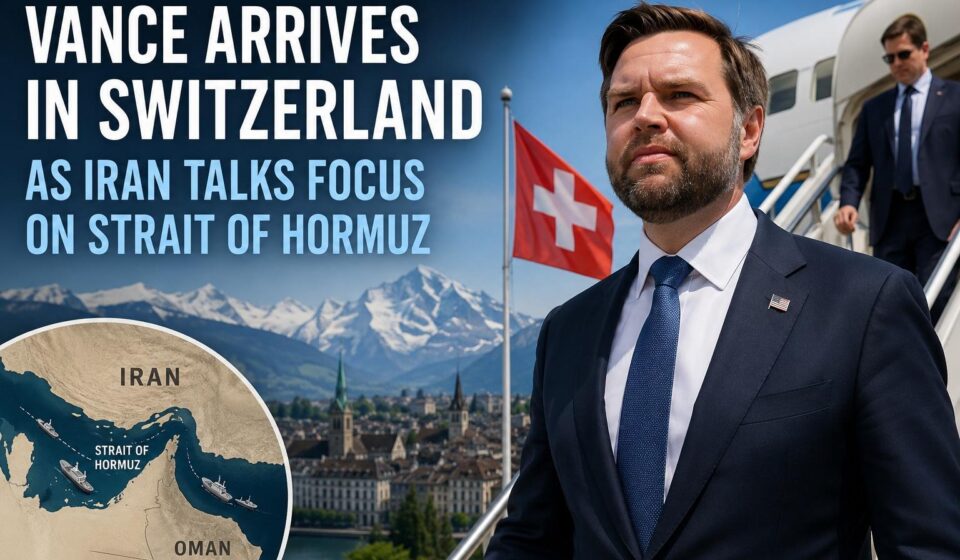
Vance Arrives in Switzerland as Iran Talks Focus on Strait of Hormuz

US Vice President JD Vance arrived in Switzerland on Sunday for a new round of negotiations with Iranian officials, as concerns over the Strait of Hormuz and regional security threats dominated the diplomatic agenda. The talks represent the most significant direct engagement between Washington and Tehran in recent months and come at a sensitive moment for Middle East stability.
The discussions are taking place at the Bürgenstock resort in Switzerland and are expected to focus on Iran’s nuclear activities, regional security issues, and efforts to preserve a fragile ceasefire framework that has faced repeated challenges. Senior US envoys, including Steve Witkoff, joined the American delegation, while Iranian officials arrived with their own team of diplomats and security advisers.
Vance Switzerland Iran Peace Talks Begin Amid Regional Tensions
The latest negotiations follow a preliminary agreement that created a pathway for broader discussions aimed at reducing tensions between the United States and Iran. Officials from both sides have expressed cautious optimism, although major differences remain on key issues, particularly Iran’s nuclear program and regional military activities.
According to reports, the United States hopes the talks will lead to greater transparency regarding Iran’s nuclear facilities and potentially pave the way for renewed international inspections. Iranian officials, meanwhile, have emphasized the need for guarantees regarding sanctions relief and regional security commitments.
The negotiations are also being closely watched by international partners, including representatives from Pakistan and Qatar, who are participating in mediation efforts.
Strait of Hormuz Remains Central Issue
A major focus of the talks is the Strait of Hormuz, one of the world’s most strategically important maritime chokepoints. Roughly a significant share of global oil and liquefied natural gas shipments passes through the narrow waterway connecting the Persian Gulf to international markets.
Recent disputes over the status of the Strait have heightened concerns among governments and energy markets. Iranian military officials have claimed restrictions on maritime traffic, while US authorities maintain that commercial shipping continues to move through the region under monitoring. The conflicting claims have added urgency to the Switzerland negotiations.
Energy analysts warn that any prolonged disruption to shipping through the Strait of Hormuz could affect global oil prices, supply chains, and economic stability far beyond the Middle East. As a result, the outcome of the talks carries implications not only for regional security but also for international energy markets.
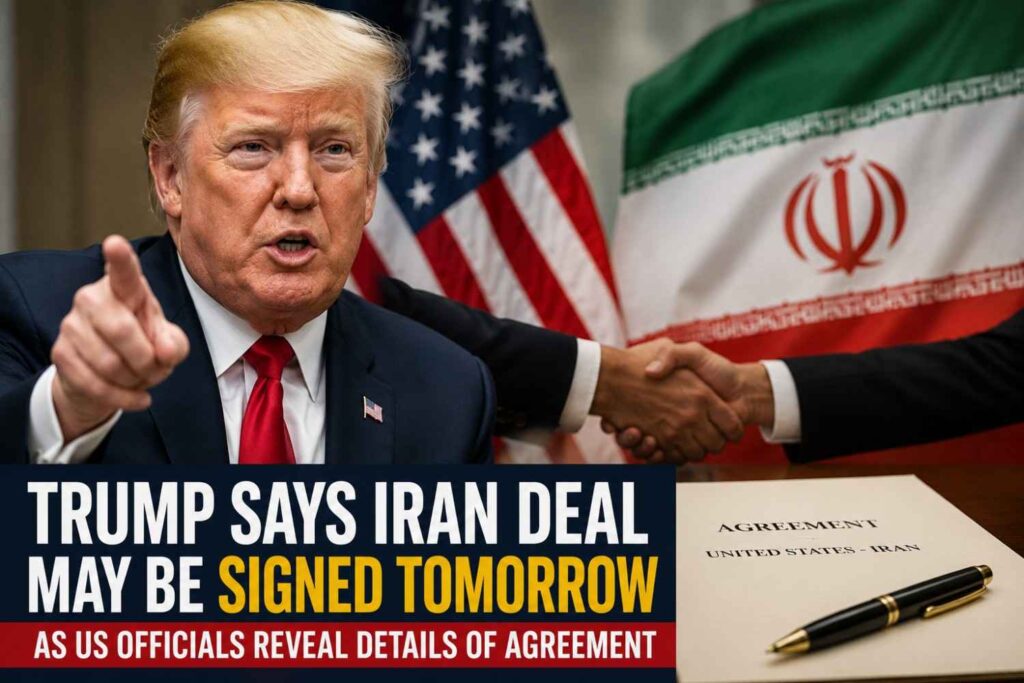
Key Details and International Reactions
Officials close to the negotiations say the discussions are expected to address two immediate priorities: Iran’s nuclear program and maintaining broader regional stability, including efforts to prevent renewed escalation involving Israel and Hezbollah.
Diplomatic observers have described the talks as a critical test of whether recent ceasefire arrangements can evolve into a longer-term framework for reducing conflict. However, ongoing violence in parts of Lebanon and disagreements over implementation of previous commitments continue to complicate the diplomatic process.
Several governments have welcomed the continuation of dialogue, arguing that sustained diplomacy remains the best option for preventing a wider regional confrontation. Financial markets are also monitoring developments closely due to the potential impact on energy supplies and trade routes.
Background and Context
Relations between the United States and Iran have remained strained for decades, with disputes involving nuclear development, sanctions, regional influence, and military activities. Recent months have seen renewed efforts to establish a framework for dialogue following a period of heightened tensions and conflict.
Switzerland has frequently served as a venue for sensitive international negotiations due to its longstanding neutrality and diplomatic role. The current talks are viewed as an opportunity to build on recent agreements while addressing unresolved issues that continue to threaten regional stability.
What Happens Next?
Negotiators are expected to spend several days discussing possible confidence-building measures and a roadmap for future talks. Any breakthrough could lead to additional meetings focused on nuclear oversight, maritime security, and economic cooperation.
However, officials caution that substantial obstacles remain. Progress will depend on both sides finding common ground on nuclear restrictions, sanctions relief, and security arrangements in the wider Middle East. The situation surrounding the Strait of Hormuz is likely to remain a key indicator of whether the diplomatic process succeeds.
Conclusion
JD Vance’s arrival in Switzerland marks a significant moment in ongoing efforts to reduce tensions between the United States and Iran. With the Strait of Hormuz emerging as a central concern alongside nuclear negotiations and regional security issues, the talks carry major implications for global energy markets and Middle East stability. As discussions continue, governments and investors worldwide will be watching closely for signs of progress or renewed uncertainty.
- Joe Biden’s Cancer Has Spread Further, Hunter Biden Says
- Daylight Saving Time Explained: Why Clocks Change Every Year
- Trump Pushes for Daylight Saving Time as Clock Change Nears
- Spanish Enclave Ceuta Sees 60,000 Migrant Arrivals Within a Day
- FIFA Speeds Up 64-Team World Cup Plans Amid Gianni Infantino Sell-Off Proposal