
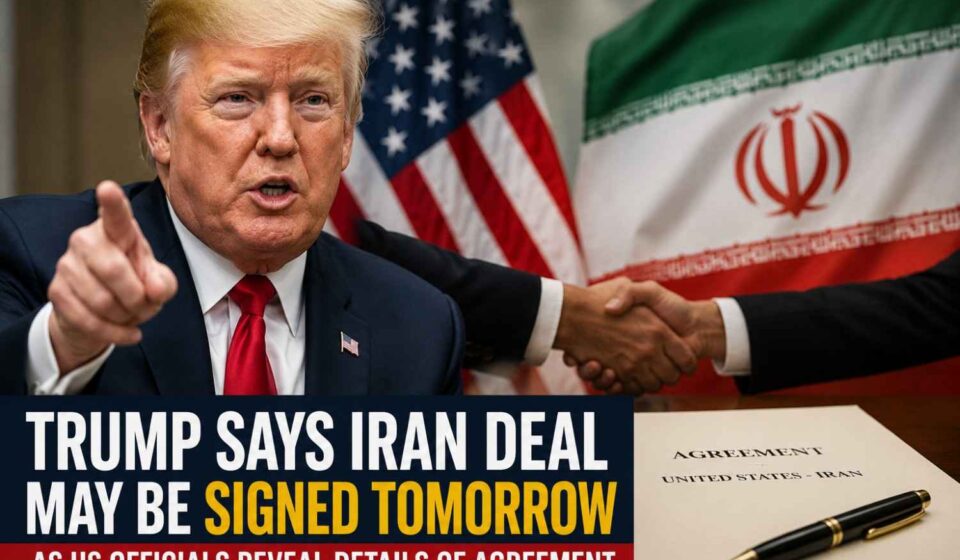
Trump Says Iran Deal May Be Signed Tomorrow as US Officials Reveal Details of Agreement

The proposed Trump Iran deal moved closer to completion on Wednesday after President Donald Trump said an agreement with Iran could be signed as early as tomorrow, while U.S. officials released new details about the framework being negotiated between Washington and Tehran.
The development represents a potentially significant diplomatic breakthrough after months of tensions and negotiations involving the United States, Iran, and several international mediators. Officials indicated that both sides have largely agreed on a preliminary framework designed to reduce hostilities and establish a pathway toward a broader long-term settlement.
While several details still require final approval, the latest comments from Trump and senior administration officials suggest that negotiators believe a formal agreement could be finalized within days.
Trump Iran Deal Moves Closer to Signing
Speaking about the negotiations, Trump said the agreement could be signed “tomorrow” if remaining issues are resolved. The president has repeatedly expressed confidence that the negotiations are nearing completion, although previous target dates have shifted during the process.
According to information released by U.S. officials, the proposed memorandum of understanding contains multiple provisions intended to establish a ceasefire framework, reopen critical maritime routes, and create a foundation for broader negotiations over the next 60 days.
Officials said the document is intended to serve as an initial political agreement rather than a final comprehensive settlement. More detailed discussions covering sanctions, security arrangements, and nuclear-related issues would continue after the agreement is signed.
The administration believes the framework could help stabilize regional tensions while creating opportunities for future diplomatic progress.
Key Details and Reactions to the Trump Iran Deal
The proposed agreement reportedly includes commitments from both sides regarding regional security and maritime navigation.
One of the most closely watched provisions involves the Strait of Hormuz, a strategically important shipping route through which a significant portion of global oil supplies passes. Trump has stated that the waterway would reopen following implementation of the agreement.
According to officials, the draft framework also includes phased discussions on sanctions relief, economic reconstruction, and future negotiations regarding Iran’s nuclear activities. Iran is expected to reaffirm commitments preventing the development of nuclear weapons, while both sides would maintain the current status quo during negotiations.
However, questions remain about several aspects of the agreement. Some U.S. lawmakers have requested additional information regarding implementation timelines and enforcement mechanisms. Meanwhile, analysts note that many of the most difficult issues have been deferred to future negotiations.
Iranian officials have also occasionally provided different timelines from those announced by Trump, highlighting the complexity of the ongoing diplomatic process.
Background and Context
The current negotiations follow an extended period of conflict and diplomatic tensions between the United States and Iran.
Relations between the two countries have been marked by decades of disputes involving regional security, sanctions, nuclear activities, and military confrontations. Efforts to establish a lasting agreement have repeatedly faced setbacks due to disagreements over verification measures, sanctions relief, and security guarantees.
In recent months, mediation efforts involving regional and international partners helped bring both sides back to the negotiating table. Pakistan, along with several other governments, has played a role in facilitating communications between the parties.
The negotiations have also drawn attention because of their potential impact on global energy markets. Any agreement that affects shipping routes through the Strait of Hormuz could influence oil supplies and international trade flows.
Supporters argue that a diplomatic breakthrough could reduce regional instability and lower the risk of future military escalation. Critics, however, caution that the success of any agreement will depend on implementation and long-term compliance by all parties involved.
What Happens Next?
If negotiators complete the remaining technical discussions, the agreement could be signed within the next 24 to 48 hours. Reports suggest officials are considering both an in-person signing ceremony and a remote signing process to accelerate implementation.
Following the signing, negotiators are expected to begin a new phase of talks focused on sanctions, nuclear oversight, regional security arrangements, and economic cooperation. The framework reportedly envisions approximately 60 days of additional negotiations before a comprehensive final agreement is pursued.
International observers will closely monitor whether both sides follow through on their commitments and whether the agreement can withstand political opposition from domestic and regional stakeholders.
Financial markets, energy companies, and foreign governments are also expected to watch developments closely due to the potential impact on oil transportation routes and broader geopolitical stability.
Conclusion
The proposed Trump Iran deal appears closer than ever to formal approval, with President Trump indicating that a signing could occur as early as tomorrow and U.S. officials outlining the structure of the agreement. While important questions remain about implementation and future negotiations, the framework represents a significant diplomatic step that could influence regional security, global energy markets, and U.S.-Iran relations for years to come. Whether the agreement ultimately delivers lasting stability will depend on the next phase of negotiations and the willingness of both sides to honor their commitments.
- Joe Biden’s Cancer Has Spread Further, Hunter Biden Says
- Daylight Saving Time Explained: Why Clocks Change Every Year
- Trump Pushes for Daylight Saving Time as Clock Change Nears
- Spanish Enclave Ceuta Sees 60,000 Migrant Arrivals Within a Day
- FIFA Speeds Up 64-Team World Cup Plans Amid Gianni Infantino Sell-Off Proposal