
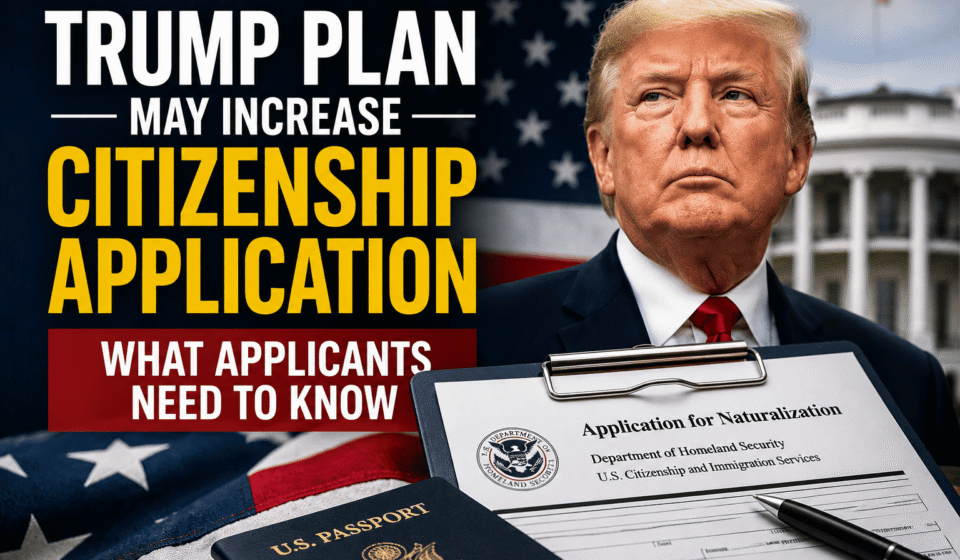

A proposal by the Trump administration to substantially increase the cost of becoming a U.S. citizen could lead to a short-term surge in citizenship applications as eligible immigrants seek to avoid higher fees and potential future restrictions.
The proposal, announced by the U.S. Department of Homeland Security, would increase the fee for naturalization applications by approximately 75%, raising the cost from $760 to $1,330 while also eliminating fee waivers and discounted rates for many low-income applicants.
Immigration attorneys and advocacy groups say the plan could encourage thousands of lawful permanent residents to submit applications before any changes become effective.
Trump Citizenship Application Plan Targets Naturalization Fees
Under the proposed rule, immigrants applying for U.S. citizenship through Form N-400 would face one of the largest fee increases in recent years. The administration argues that the changes are necessary to cover processing costs and reduce reliance on subsidized application programs.
In addition to the higher filing fee, the proposal would remove fee waivers that have historically helped lower-income immigrants pursue citizenship. Fee reductions for applicants near the federal poverty threshold would also be eliminated.
Supporters of the plan argue that citizenship applications should reflect the actual cost of processing and security reviews. Critics contend that the increased costs could create financial barriers for immigrants who have already spent years living and working legally in the United States.
Why Applications Could Increase Before Changes Take Effect
Historically, major immigration policy changes often trigger a temporary increase in applications as people attempt to file under existing rules.
Immigration lawyers report that many green card holders are already seeking information about eligibility requirements and filing timelines. Some applicants may choose to submit paperwork sooner rather than risk paying hundreds of dollars more in the future.
Experts note that the proposed changes are still subject to a public comment period and are not expected to take effect immediately. However, uncertainty surrounding future immigration policies could motivate eligible residents to begin the naturalization process now.

Additional Immigration Measures Add to Concerns
The fee proposal arrives amid a broader effort by the Trump administration to tighten immigration screening and citizenship verification procedures.
Recent measures include expanded background checks for immigration applicants and increased scrutiny of citizenship records. Federal agencies have also introduced enhanced security reviews intended to identify fraud and improve vetting procedures.
At the same time, the administration has expanded efforts to review cases involving individuals suspected of obtaining citizenship through fraud or misrepresentation. Supporters describe these actions as necessary for maintaining the integrity of the immigration system, while critics argue they may discourage eligible immigrants from pursuing naturalization.
What Happens Next?
The proposed fee increase must go through the federal rulemaking process before becoming official. During that period, members of the public, immigration organizations, and legal experts will have an opportunity to submit comments and recommendations.
If implemented, the changes could significantly alter the cost of obtaining U.S. citizenship and influence application patterns across the country.
Immigration analysts expect many eligible permanent residents to closely monitor the proposal and potentially accelerate their applications before any new fees take effect.
Conclusion
The Trump administration’s proposal to raise citizenship application fees may have an unintended consequence: encouraging more immigrants to apply for naturalization in the short term. While supporters view the changes as a way to strengthen immigration oversight and recover administrative costs, critics warn that higher fees could make citizenship less accessible for many of the families.
As the proposal moves through the regulatory process, eligible green card holders are likely to weigh whether applying sooner could help them avoid higher costs and increased uncertainty in the future.
- Joe Biden’s Cancer Has Spread Further, Hunter Biden Says
- Daylight Saving Time Explained: Why Clocks Change Every Year
- Trump Pushes for Daylight Saving Time as Clock Change Nears
- Spanish Enclave Ceuta Sees 60,000 Migrant Arrivals Within a Day
- FIFA Speeds Up 64-Team World Cup Plans Amid Gianni Infantino Sell-Off Proposal