Federal Judge Blocks Trump Citizenship Database Over Privacy Concerns

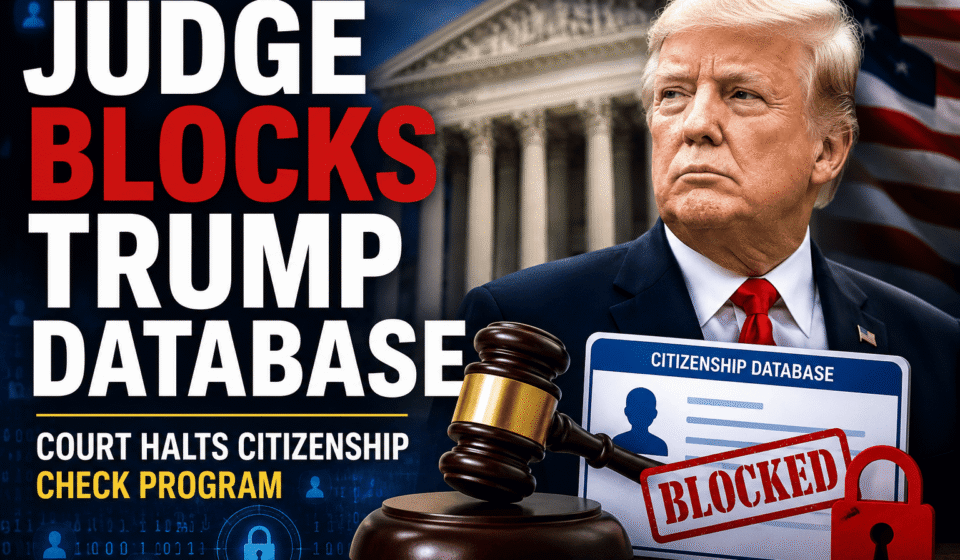
A federal judge has blocked the Trump administration from using a revamped federal database designed to verify citizenship and voter eligibility, dealing a significant setback to one of the administration’s election integrity initiatives.
The ruling, issued by U.S. District Judge Sparkle L. Sooknanan in Washington, found that the government’s use of the database raised serious concerns about privacy protections and the potential for eligible voters to be wrongly removed from voter rolls. The decision comes as election officials across the United States prepare for upcoming elections amid ongoing debates over voter verification and election security.
The case has drawn national attention because it involves millions of Americans’ personal information, including citizenship records and Social Security data that were incorporated into an expanded federal verification system.
Judge Blocks Trump Administration Database Over Privacy Concerns
At the center of the legal dispute is the Systematic Alien Verification for Entitlements (SAVE) program, a federal database originally created to help government agencies verify immigration and citizenship status for public benefits.
The Trump administration expanded the system’s capabilities, allowing state and local election officials to conduct broader searches intended to identify noncitizens who may be registered to vote. The upgraded version also incorporated additional personal information and bulk-search functions designed to streamline voter eligibility checks.
However, advocacy groups including voting rights organizations and privacy advocates argued that the changes exceeded legal limits and created significant risks for eligible voters. They claimed the database could incorrectly classify U.S. citizens as noncitizens due to outdated or incomplete records.
In her ruling, Judge Sooknanan concluded that the federal government had failed to adequately protect Americans’ personal information and voting rights. She warned that the system’s inaccuracies could result in lawful voters being improperly removed from registration rolls.
Key Details and Reactions
Court documents indicate that at least 67 million voter registration records had been reviewed using the expanded verification system in several states. Critics argued that such large-scale searches increased the likelihood of errors affecting legitimate voters.
The Department of Homeland Security defended the program as an important tool for ensuring election integrity and preventing noncitizens from participating in federal elections. Administration officials have consistently argued that states should have access to federal resources to verify voter eligibility.
Voting rights groups welcomed the ruling, describing it as a victory for privacy protections and democratic participation. They contend that inaccurate citizenship checks disproportionately affect naturalized citizens and individuals whose records contain clerical errors.
Legal experts say the decision is likely to influence future debates about how federal agencies share personal information with state election officials.
Background and Context
The dispute is part of a broader effort by the Trump administration to strengthen federal oversight of election procedures and voter eligibility verification.
Since returning to office, President Donald Trump has promoted measures aimed at tightening voter registration requirements and increasing citizenship verification. Supporters argue these policies help safeguard election integrity and public confidence in election outcomes. Critics counter that such measures can create unnecessary barriers for eligible voters.
The SAVE database became a central component of those efforts after federal agencies expanded its capabilities to include more comprehensive citizenship records and search functions. Privacy advocates quickly challenged the changes in court, arguing they violated federal privacy laws and exceeded the database’s original purpose.
The ruling also follows previous legal challenges involving federal attempts to obtain or share voter information, highlighting ongoing tensions between election security initiatives and privacy protections.

What Happens Next?
The court order immediately prevents federal officials from using the expanded SAVE database for voter eligibility verification while the legal challenge continues.
Legal analysts expect the Department of Justice to appeal the ruling, potentially setting up a lengthy legal battle that could reach higher federal courts. The outcome may determine how far federal agencies can go in collecting and sharing personal information for election-related purposes.
For election officials, the decision creates uncertainty about what tools can be used to verify citizenship status ahead of future elections. States that relied on the system may now need to explore alternative methods for conducting voter eligibility reviews.
Conclusion
The ruling blocking the Trump administration’s citizenship verification database marks a significant development in the ongoing debate over election security, privacy rights, and voter access. While supporters of the program viewed it as a tool to strengthen election integrity, the court determined that its implementation posed unacceptable risks to Americans’ personal information and voting rights.
As legal challenges continue, the case is expected to remain a focal point in national discussions about the balance between election oversight and individual privacy protections.
- Joe Biden’s Cancer Has Spread Further, Hunter Biden Says
- Daylight Saving Time Explained: Why Clocks Change Every Year
- Trump Pushes for Daylight Saving Time as Clock Change Nears
- Spanish Enclave Ceuta Sees 60,000 Migrant Arrivals Within a Day
- FIFA Speeds Up 64-Team World Cup Plans Amid Gianni Infantino Sell-Off Proposal