
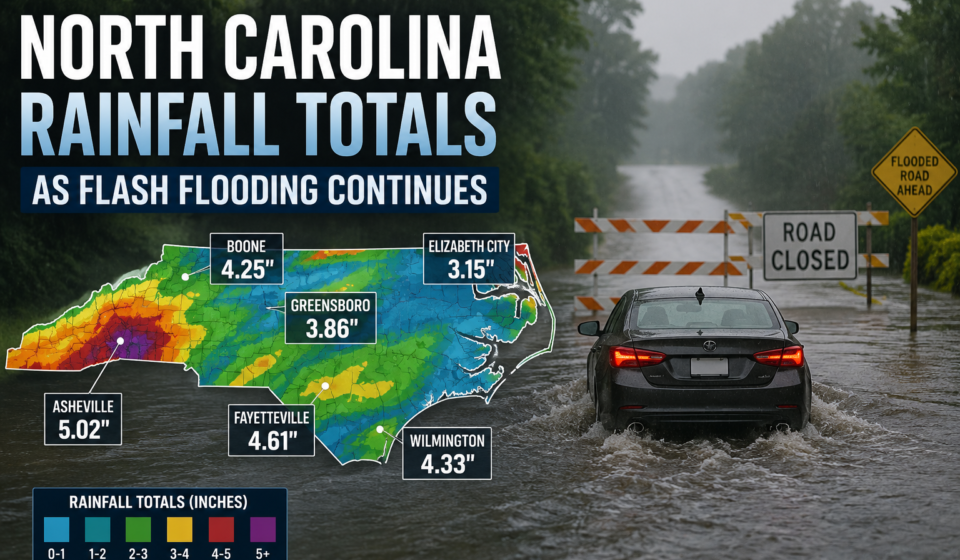
North Carolina Rainfall Totals Rise as Flash Flooding Continues Across the State

Communities across North Carolina are facing dangerous flooding conditions as North Carolina rainfall totals continue to climb following persistent heavy rain. Forecasters have warned that saturated ground, overflowing rivers, and additional rainfall could worsen flooding in several counties, prompting emergency officials to urge residents to remain alert.
Flash flood warnings and flood advisories remain in effect for multiple parts of the state as emergency crews respond to flooded roads, stranded motorists, and localized water rescues. Meteorologists say the combination of slow-moving storms and repeated rounds of rainfall has created hazardous conditions, particularly in low-lying areas and locations near creeks and rivers.
North Carolina Rainfall Totals Continue to Increase
Rainfall has varied significantly across North Carolina, with some communities recording several inches of precipitation within a relatively short period. Weather monitoring stations continue to update North Carolina rainfall totals as storms move through the region, with localized areas experiencing especially intense downpours.
Meteorologists note that rainfall amounts can differ dramatically over short distances because thunderstorms have repeatedly developed over the same locations. This phenomenon, often referred to as “training,” increases the risk of flash flooding by overwhelming drainage systems and causing rapid rises in streams and small rivers.
Officials have emphasized that even areas receiving less rainfall remain vulnerable if nearby waterways overflow or if additional storms develop during the coming hours.
Transportation has also been affected. Numerous roads have become impassable because of standing water, while emergency responders have advised motorists not to drive through flooded streets. Authorities continue to remind residents that just a small amount of moving water can sweep away vehicles.
Latest North Carolina Rainfall Totals and Flash Flood Response
Emergency management agencies and local governments are closely monitoring North Carolina rainfall totals as they coordinate responses across affected communities.
The National Weather Service has continued issuing flood-related alerts where conditions warrant, urging residents to stay informed through official forecasts and local emergency notifications. Weather officials have stressed that rainfall totals alone do not determine flood risk, as soil saturation, terrain, and river levels also play important roles.
Local officials have encouraged residents living in flood-prone neighborhoods to prepare for possible evacuations if conditions deteriorate. Emergency shelters may be opened in areas experiencing significant flooding, depending on the severity of the situation.
Public works departments are working to clear blocked drainage systems where possible, while utility crews remain prepared to respond if flooding damages electrical infrastructure or disrupts essential services.
Schools, businesses, and public transportation services in some locations may also experience temporary disruptions depending on local flood conditions and road accessibility.
Background and Context
North Carolina has experienced numerous flash flooding events in recent years, particularly during periods of prolonged heavy rainfall associated with tropical systems, stalled weather fronts, and slow-moving thunderstorms.
The state’s geography contributes to varying flood risks. Mountain communities can experience rapid runoff and fast-rising streams, while central and eastern parts of the state often face river flooding and widespread water accumulation after extended rainfall.
Climate experts have noted that warmer atmospheric conditions can increase the amount of moisture available during storm systems, potentially leading to heavier rainfall events. Although individual storms cannot be attributed to a single cause, emergency planners have increasingly emphasized preparedness for more frequent extreme precipitation events.
Flash flooding remains one of the most dangerous weather hazards because it can develop with little warning. Water levels may rise rapidly within minutes, particularly overnight when visibility is limited.
What Happens Next for North Carolina Rainfall Totals?
Forecasters continue to monitor the evolving weather pattern to determine whether additional rainfall will affect already saturated areas.
If storms persist, North Carolina rainfall totals could increase further, extending flood risks into additional communities. River forecasts will also remain important in the coming days, as larger waterways often continue rising even after rainfall has ended.
Residents are encouraged to monitor updated forecasts, heed evacuation orders if issued, and avoid unnecessary travel during periods of heavy rain. Officials recommend keeping emergency supplies readily available, including flashlights, medications, drinking water, and communication devices.
Emergency management agencies will continue assessing flood impacts, reopening roads when safe, and coordinating recovery efforts in areas where floodwaters recede.
Conclusion
The latest North Carolina rainfall totals underscore the significant impact of ongoing heavy rainfall across the state. Flash flooding has disrupted travel, prompted emergency responses, and increased concerns about additional rainfall in already saturated areas.
As weather conditions continue to evolve, authorities are urging residents to remain vigilant, follow official warnings, and avoid flooded roadways. Continued monitoring of rainfall totals, river levels, and weather forecasts will be essential as North Carolina works to manage the ongoing flood threat.
- Joe Biden’s Cancer Has Spread Further, Hunter Biden Says
- Daylight Saving Time Explained: Why Clocks Change Every Year
- Trump Pushes for Daylight Saving Time as Clock Change Nears
- Spanish Enclave Ceuta Sees 60,000 Migrant Arrivals Within a Day
- FIFA Speeds Up 64-Team World Cup Plans Amid Gianni Infantino Sell-Off Proposal