
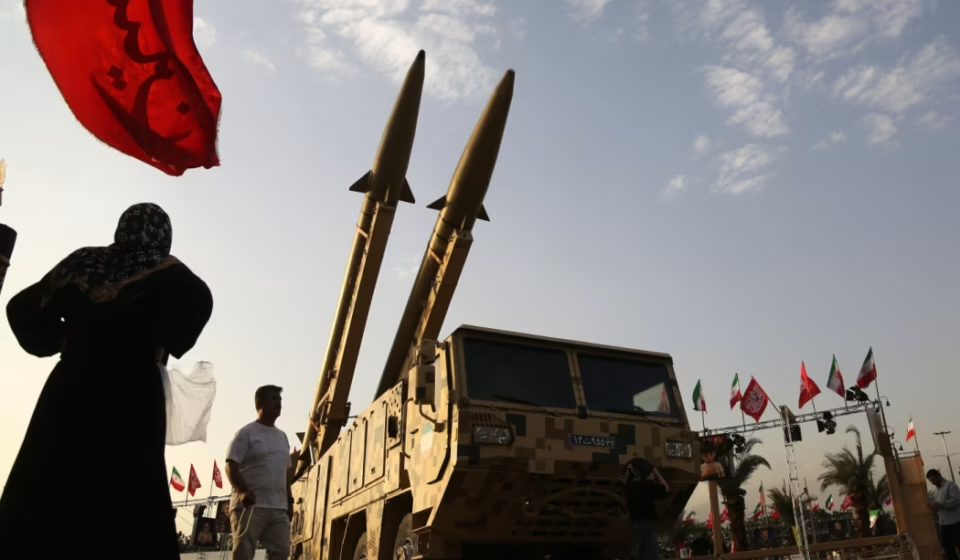

Iran Surprise Missile Attack on U.S. Forces Raises Regional Tensions
The Iran Surprise Missile Attack on U.S. Forces has intensified security concerns across the Middle East after U.S. military officials reported that multiple ballistic missiles launched by Iran were intercepted before reaching their intended targets. According to U.S. Central Command (CENTCOM), the attack targeted American forces stationed in the region, but no casualties or significant damage were immediately reported.
The incident marks one of the most serious direct confrontations involving Iranian forces and U.S. military personnel in recent months. Although the missiles were successfully intercepted, the attack has renewed fears of broader regional instability and raised questions about the future of diplomatic efforts aimed at reducing tensions.
Iran Surprise Missile Attack on U.S. Forces: Main Development
According to CENTCOM, Iran launched multiple ballistic missiles in what U.S. officials described as an attempted surprise attack against American military personnel stationed in the Middle East. The U.S. military said its air defense systems intercepted every incoming missile before impact.
Officials stated that U.S. forces remain on heightened alert while military commanders continue to monitor the regional security situation. Although the interception prevented reported casualties, the attack represents a significant escalation following weeks of heightened military activity involving Iran, the United States, and regional allies.
The missile launches reportedly came after a brief period during which diplomatic efforts had shown limited signs of easing tensions. Analysts say the latest developments indicate that both military preparedness and diplomatic engagement remain critical as the situation evolves.
Key Details and Reactions to the Iran Surprise Missile Attack on U.S. Forces
U.S. Central Command confirmed that all ballistic missiles were intercepted and emphasized that American forces remain fully prepared to respond to additional threats if necessary. Military officials did not immediately release further operational details regarding the interception systems used or the precise number of missiles involved.
Following the attack, reports indicated that the United States coordinated additional military operations targeting Iranian-backed militia positions in Iraq alongside regional partners. Officials described those operations as defensive measures intended to reduce the threat posed by groups linked to Tehran.
Financial markets also reacted quickly. Oil prices moved higher as investors assessed the possibility of further disruptions to energy supplies and shipping routes across the Gulf region, particularly around the Strait of Hormuz, one of the world’s most strategically important maritime corridors.
Security analysts noted that while no immediate casualties were reported, the attack demonstrates Iran’s willingness to directly challenge U.S. military assets under current regional conditions. At the same time, experts cautioned against drawing conclusions about future military action until additional official statements are released.
Background and Context of the Iran Surprise Missile Attack on U.S. Forces
Relations between Iran and the United States have remained strained for years, driven by disagreements over Iran’s nuclear program, sanctions, regional proxy conflicts, and military operations across the Middle East.
Throughout 2026, tensions have increased following a series of military exchanges involving U.S. forces, Iranian military assets, and Tehran-backed armed groups operating in Iraq, Yemen, and elsewhere in the region. Previous missile and drone incidents around the Strait of Hormuz and Gulf shipping lanes have already heightened concerns about regional security and global energy markets.
The Middle East remains strategically important because it hosts numerous U.S. military installations while also serving as a critical hub for global oil exports. Any escalation involving Iran has the potential to affect international trade, energy prices, and broader geopolitical stability.
Defense experts have also warned that recent military operations have increased demand for advanced missile defense systems, including Patriot and THAAD interceptors, making regional air defense capabilities an increasingly important strategic consideration.
What Happens Next After the Iran Surprise Missile Attack on U.S. Forces?
Military officials are expected to continue assessing intelligence related to the attack while maintaining elevated force protection measures across U.S. installations in the region.
Diplomatic efforts involving regional governments could also intensify in an attempt to prevent further escalation. International observers will closely monitor whether additional missile launches, retaliatory strikes, or negotiations follow the latest incident.
Markets are likewise expected to remain sensitive to developments involving the Strait of Hormuz and other critical shipping routes. Any further disruption could influence global oil prices and international economic confidence.
For now, U.S. officials maintain that American forces remain capable of defending regional bases while continuing operations alongside allied partners.
Conclusion
The reported Iran Surprise Missile Attack on U.S. Forces represents another significant escalation in an already volatile regional security environment. Although U.S. officials said all incoming missiles were intercepted and no casualties were reported, the incident underscores the fragile state of relations between Washington and Tehran. With military forces on heightened alert and diplomatic efforts facing renewed pressure, the coming days are likely to play a critical role in determining whether the confrontation remains contained or develops into a broader regional crisis.
- Joe Biden’s Cancer Has Spread Further, Hunter Biden Says
- Daylight Saving Time Explained: Why Clocks Change Every Year
- Trump Pushes for Daylight Saving Time as Clock Change Nears
- Spanish Enclave Ceuta Sees 60,000 Migrant Arrivals Within a Day
- FIFA Speeds Up 64-Team World Cup Plans Amid Gianni Infantino Sell-Off Proposal