FDA Potato Chip Recall Upgraded to Highest Risk Level Over Salmonella Risk

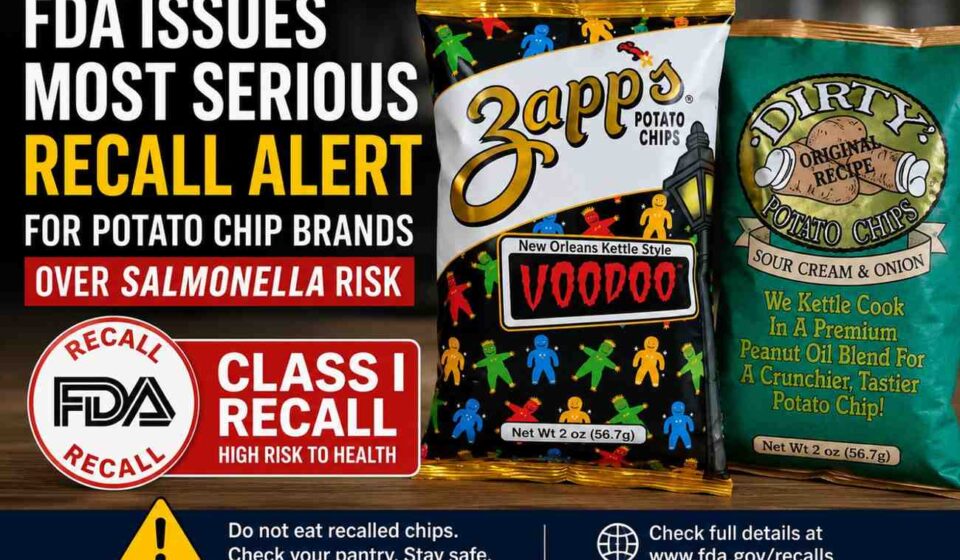
The FDA potato chip recall has been elevated to the agency’s highest safety classification after U.S. health officials warned that certain potato chip products may pose a serious health risk because of potential salmonella contamination.
The U.S. Food and Drug Administration (FDA) has classified the voluntary recall involving select Zapp’s and Dirty brand potato chips as a Class I recall, the most serious category issued by the agency. A Class I designation means there is a reasonable probability that consuming the affected products could result in serious health consequences or death.
Although no illnesses have been reported in connection with the recalled products, regulators and the manufacturer are urging consumers not to eat the affected chips and to dispose of them immediately or seek a refund.
FDA Potato Chip Recall Upgraded to Class I
The recall was originally announced in May by Utz Quality Foods LLC, which manufactures both Zapp’s and Dirty potato chip brands. The company said the action was taken after learning that a seasoning ingredient containing dry milk powder, supplied by a third-party vendor, could potentially be contaminated with salmonella.
According to the FDA, the affected seasoning batches tested negative before they were used in production. Nevertheless, the company proceeded with the recall out of an abundance of caution following notification from its supplier.
The products covered by the recall include several package sizes and flavors, including:
- Zapp’s Bayou Blackened Ranch
- Zapp’s Big Cheezy
- Dirty Salt & Vinegar
- Dirty Maui Onion
- Dirty Sour Cream & Onion
The recalled products were distributed nationwide and include specific best-by dates ranging from late July through August 2026. Consumers should carefully check packaging details against the FDA recall notice.
FDA Potato Chip Recall: Key Details and Official Response
The FDA defines a Class I recall as a situation in which there is a reasonable probability that exposure to the recalled product could cause serious adverse health consequences or death. This classification is reserved for recalls involving the highest potential public health risk.
Utz emphasized that no confirmed salmonella contamination has been detected in the finished potato chips themselves, and the recall remains precautionary. Additionally, the company reported that it has not received any complaints or reports of illnesses associated with the affected products.
Consumers who purchased the recalled chips are advised not to consume them. Instead, they should throw them away or contact Utz Customer Care for refund information. Retailers have also been instructed to remove affected products from store shelves.
Health officials note that salmonella infection can cause fever, diarrhea, stomach cramps, nausea and vomiting. While most healthy individuals recover without treatment, the infection can become severe in young children, older adults, pregnant women and people with weakened immune systems.
Background and Context
Food recalls linked to salmonella contamination remain a significant public health concern in the United States.
Salmonella is one of the leading causes of foodborne illness, and the FDA regularly works with manufacturers to remove potentially contaminated products from the market before illnesses occur.
In this case, the recall stems from concerns about a seasoning ingredient rather than the potatoes themselves. The dry milk powder used in the seasoning was sourced from California Dairies Inc. through a third-party supplier. Although testing did not detect salmonella in the seasoning batches used during production, the supplier notification prompted the voluntary recall.
The FDA’s decision to upgrade the recall to Class I reflects its assessment of the potential severity of exposure rather than confirmation that contamination occurred in every recalled package.
What Happens Next?
Consumers are encouraged to review the FDA’s complete recall list to determine whether any products in their homes are affected.
The FDA will continue monitoring the recall while Utz works with retailers and distributors to ensure recalled products are removed from circulation. Additional updates may be issued if new information becomes available or if any illnesses are reported.
Food safety experts also recommend that consumers routinely monitor FDA recall announcements, particularly for packaged foods with long shelf lives that may remain in pantries for several weeks or months.
For anyone who believes they may have consumed one of the recalled products and develops symptoms consistent with salmonella infection, medical advice should be sought promptly, especially for individuals in higher-risk groups.
Conclusion
The FDA’s decision to classify the recall of select Zapp’s and Dirty potato chips as a Class I recall underscores the seriousness of potential salmonella contamination, even though no illnesses have been linked to the products so far.
Consumers are advised to check their pantries, compare product information with the FDA recall notice, and avoid consuming any affected chips. Prompt action by consumers and retailers remains an important part of preventing possible foodborne illness while the recall continues.
- Joe Biden’s Cancer Has Spread Further, Hunter Biden Says
- Daylight Saving Time Explained: Why Clocks Change Every Year
- Trump Pushes for Daylight Saving Time as Clock Change Nears
- Spanish Enclave Ceuta Sees 60,000 Migrant Arrivals Within a Day
- FIFA Speeds Up 64-Team World Cup Plans Amid Gianni Infantino Sell-Off Proposal