
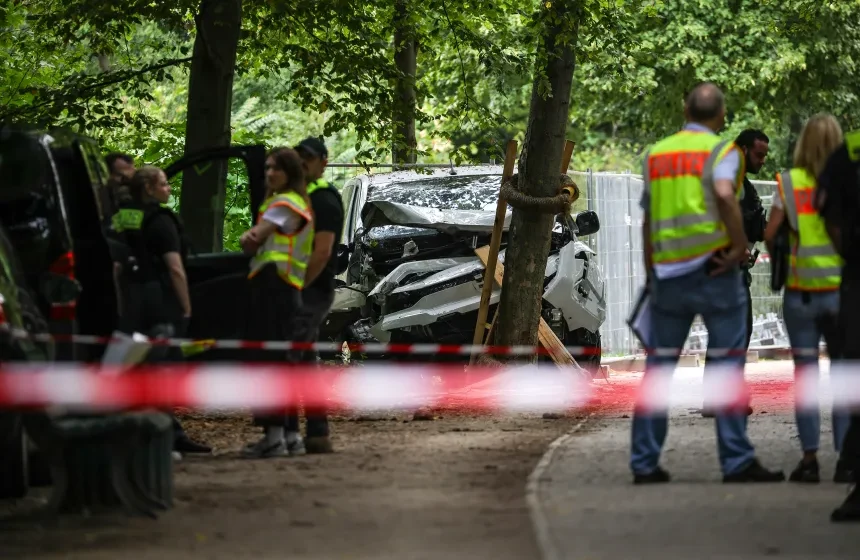

The Berlin Pride attack suspect was shot dead by German police after a nearly 24-hour manhunt, bringing an end to the search following a deadly assault near Berlin’s annual Christopher Street Day celebrations. Authorities say the investigation is continuing as prosecutors examine evidence, the suspect’s background, and possible extremist motives behind the attack.
The incident has shocked Germany and the wider international community, coming during one of Europe’s largest LGBTQ+ events. One woman was killed and dozens of people were injured after a vehicle drove into a crowd before the attacker allegedly continued the assault with a bladed weapon. The case has renewed debate over public safety, counterterrorism policies, and the protection of large public gatherings.
Berlin Pride attack suspect located after nationwide manhunt
German authorities launched an intensive search after the attacker fled the scene of Saturday’s assault in Berlin’s Tiergarten park near the Brandenburg Gate.
Police later located the suspect in Berlin’s Spandau district. According to officials, the man allegedly charged officers while carrying a bladed weapon, prompting police to open fire. Emergency responders attempted life-saving measures, but the suspect died at the scene.
Federal prosecutors identified the suspect as 21-year-old Abdul Ballout, a German citizen with Lebanese family roots. Investigators said he had previously come to the attention of authorities over extremist-related concerns and had a criminal history connected to terrorism-related offenses.
Authorities said the attack left a Polish woman in her 60s dead while approximately 29 people suffered injuries of varying severity. Several victims required hospital treatment, although officials later reported that none of those still hospitalized remained in immediate life-threatening condition.
Key details and reactions to the Berlin Pride attack suspect investigation
Investigators have recovered evidence that could help explain the suspect’s alleged motive.
German prosecutors said they discovered a video on the suspect’s mobile phone in which he appeared to pledge allegiance to the Islamic State group. Authorities also reported finding extremist-related material during searches connected to the investigation. However, investigators continue to examine all evidence before reaching final conclusions regarding planning, intent, and whether anyone else was involved.
Interior Minister Alexander Dobrindt said the suspect had previously been known to authorities, prompting renewed scrutiny over how he remained free despite earlier convictions. Officials are reviewing monitoring procedures for individuals considered potential security risks.
German Chancellor Friedrich Merz also called for a reassessment of security policies and questioned whether existing legal tools are sufficient to deal with individuals previously identified as extremist threats.
Berlin officials emphasized that the investigation remains active and urged the public to avoid speculation while forensic and intelligence experts continue their work.
Background and context surrounding the Berlin Pride attack suspect
Christopher Street Day, commonly known as Berlin Pride, is among Europe’s largest annual LGBTQ+ celebrations, attracting hundreds of thousands of participants from Germany and abroad.
The attack has intensified concerns about security at major public events across Europe. Germany has experienced several vehicle-ramming attacks in recent years, leading authorities to increase protective measures around festivals, markets, and political gatherings.
Investigators believe the Berlin incident bears characteristics consistent with previous attacks involving vehicles targeting crowded public spaces, although prosecutors continue to assess all available evidence before formally concluding the motive.
The case has also highlighted broader discussions about counter-radicalization programs, intelligence sharing, and monitoring individuals previously convicted of extremist-related offenses. Critics argue that authorities must carefully balance civil liberties with public safety while ensuring credible threats receive appropriate attention.
What happens next after the Berlin Pride attack suspect’s death?
Although the suspect is dead, German prosecutors say the criminal investigation will continue.
Authorities are analyzing digital devices, reviewing surveillance footage, interviewing witnesses, and reconstructing the suspect’s movements before the attack. Investigators are also examining whether anyone provided assistance or encouragement, although officials have not publicly identified additional suspects.
The federal government is expected to evaluate existing counterterrorism policies, including supervision of convicted extremists and security planning for large public events. Recommendations could include enhanced monitoring measures and updated risk assessment procedures.
Meanwhile, Berlin’s LGBTQ+ community and civic leaders have expressed solidarity with victims and their families. Public memorials and community gatherings have emphasized resilience while rejecting violence directed at minority communities.
Conclusion
The death of the Berlin Pride attack suspect has ended one of Germany’s most closely watched manhunts in recent years, but it has not ended the investigation. Prosecutors continue to examine the suspect’s alleged extremist connections, digital evidence, and prior history while officials review security practices surrounding major public events. As Germany mourns the victim and supports those injured, the findings of the investigation are likely to influence future counterterrorism and public safety policies across the country.
- Joe Biden’s Cancer Has Spread Further, Hunter Biden Says
- Daylight Saving Time Explained: Why Clocks Change Every Year
- Trump Pushes for Daylight Saving Time as Clock Change Nears
- Spanish Enclave Ceuta Sees 60,000 Migrant Arrivals Within a Day
- FIFA Speeds Up 64-Team World Cup Plans Amid Gianni Infantino Sell-Off Proposal