
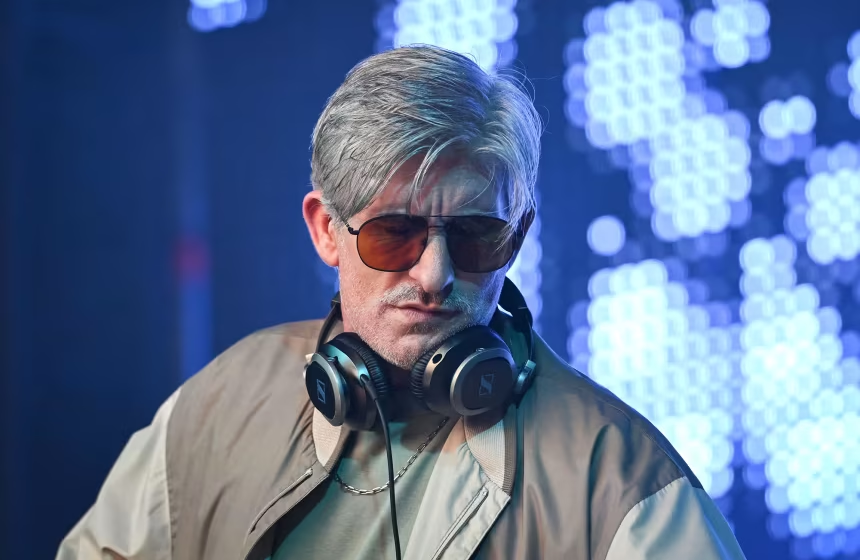

PARIS — Kavinsky found dead at his home in Paris has sent shockwaves through the international electronic music community. The French producer, whose real name was Vincent Belorgey, was discovered at his residence on Tuesday evening. He was 50 years old. Authorities have opened an investigation into the circumstances surrounding his death, though early indications suggest there were no suspicious circumstances.
Kavinsky became a globally recognized figure after his synth-driven hit “Nightcall” gained worldwide popularity through its inclusion in the 2011 film Drive. Over the following decade, he remained one of the defining artists of the modern synthwave movement, inspiring musicians and filmmakers with his distinctive retro-futuristic sound.
Kavinsky found dead: Authorities investigate death in Paris
Emergency services responded after Kavinsky was found at his Paris residence on Tuesday evening. French authorities confirmed an investigation has been launched to establish the exact cause of death. Officials said initial findings did not indicate foul play, although further medical examinations are expected as part of the inquiry.
Some media reports indicated the musician had experienced health issues in the days leading up to his death, while others reported he may have suffered a stroke. However, authorities have not officially confirmed a cause of death, and investigations remain ongoing.
The sudden loss prompted an outpouring of tributes from across France and the international music industry, reflecting the significant influence Kavinsky had on electronic music over the past two decades.
Key details and reactions following Kavinsky found dead
French President Emmanuel Macron paid tribute to the musician, describing him as a lasting symbol of French artistic excellence and praising the global impact of his work. France’s culture ministry also honored Kavinsky, calling him one of the country’s most distinctive contemporary musical voices.
Fans around the world also expressed their grief across social media, remembering the producer for creating one of the defining electronic tracks of the 2010s. Many highlighted how “Nightcall” introduced them to synthwave and praised its enduring popularity years after its release.
Artists, producers, and music enthusiasts described Kavinsky’s music as cinematic, atmospheric, and timeless. His distinctive combination of electronic rhythms and 1980s-inspired synthesizers helped establish a style that influenced countless musicians within electronic, pop, and film music.
Background and context: Kavinsky’s career and legacy
Born Vincent Belorgey, Kavinsky emerged from France’s vibrant electronic music scene in the early 2000s. Although initially known among fans of French electronic music, his international breakthrough came with the release of “Nightcall” in 2010.
The track gained worldwide recognition after being prominently featured in Nicolas Winding Refn’s critically acclaimed film Drive, starring Ryan Gosling. Its haunting vocals, pulsating bassline, and nostalgic production became closely associated with the film’s visual style and helped introduce millions of listeners to synthwave music.
Kavinsky’s debut album, OutRun, further cemented his reputation for combining cinematic storytelling with electronic production. His music drew heavily from 1980s action films, arcade culture, sports cars, and science fiction, creating a unique artistic identity that distinguished him from many of his contemporaries.
In recent years, he continued performing internationally and experienced renewed visibility after appearing during the closing ceremony of the Paris 2024 Olympic Games alongside Belgian singer Angèle and the French band Phoenix, performing a celebrated version of “Nightcall.” The performance introduced his music to a new global audience and reaffirmed his status as one of France’s most recognizable electronic artists.
Beyond his solo work, Kavinsky collaborated with several notable musicians throughout his career and remained an influential figure within the broader French electronic movement that followed the international success of artists such as Daft Punk.
What happens next after Kavinsky found dead?
Investigators are expected to complete medical examinations and determine the official cause of death in the coming days. French authorities have not announced a timeline for concluding the investigation but have indicated there is currently no evidence suggesting criminal involvement.
Meanwhile, fans, fellow musicians, and cultural institutions are expected to continue honoring Kavinsky’s legacy through tributes, memorial performances, and renewed interest in his catalog. Music streaming services are also likely to see increased listening activity for classics including “Nightcall,” “Odd Look,” and tracks from OutRun and Reborn.
His influence extends beyond electronic music, with filmmakers, video game developers, and producers continuing to draw inspiration from the cinematic style he helped popularize.
Conclusion
The death of Kavinsky marks the loss of one of France’s most influential electronic musicians. Best known for the enduring success of “Nightcall,” his work shaped the global synthwave movement and left a lasting mark on modern electronic music. As authorities continue investigating the circumstances surrounding his death, tributes from political leaders, fellow artists, and fans underscore the worldwide impact of a career that blended nostalgia, innovation, and unmistakable musical identity.
- Joe Biden’s Cancer Has Spread Further, Hunter Biden Says
- Daylight Saving Time Explained: Why Clocks Change Every Year
- Trump Pushes for Daylight Saving Time as Clock Change Nears
- Spanish Enclave Ceuta Sees 60,000 Migrant Arrivals Within a Day
- FIFA Speeds Up 64-Team World Cup Plans Amid Gianni Infantino Sell-Off Proposal