
A Japanese shopping centre earthquake triggered a major emergency response in southern Japan on Tuesday after a powerful earthquake struck the Kyushu region, leaving many people trapped inside a damaged shopping mall, according to fire service officials.
Emergency crews rushed to the scene after reports that part of a shopping centre had collapsed following the strong tremor. Rescue teams worked through damaged sections of the building as authorities attempted to locate and free those believed to be trapped beneath debris. Officials warned that the situation remained fluid, with casualty figures and the number of people inside the building still being verified.
Japanese Shopping Centre Earthquake Sparks Major Rescue Operation
The earthquake struck Japan’s Kumamoto Prefecture in the afternoon, shaking a wide area across Kyushu and prompting widespread disruption to transport, utilities, and businesses. Authorities initially issued a tsunami advisory, although it was later lifted after further assessment.
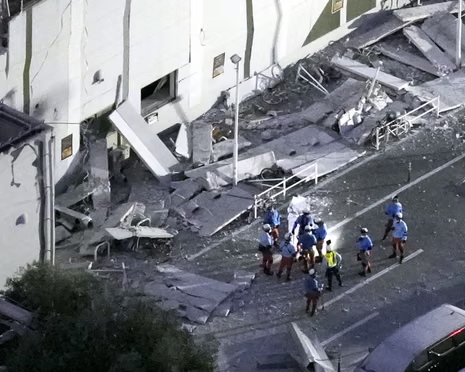
One of the most serious incidents occurred at an Aeon shopping centre, where emergency services received reports of structural collapse and an apparent explosion following the earthquake. Fire department officials said many people were believed to be trapped inside the building, leading to an extensive rescue effort involving firefighters, police officers, and specialized disaster response teams.
Television footage and eyewitness accounts showed rescue workers searching through rubble while emergency vehicles surrounded the shopping complex. Authorities established triage areas nearby as medical teams prepared to treat injured survivors.
Prime Minister Sanae Takaichi said the government had activated its emergency response system and deployed additional personnel to assist local authorities. Thousands of members of Japan’s Self-Defense Forces were mobilized to support rescue operations and help communities affected by the earthquake.
Key Details and Reactions to the Japanese Shopping Centre Earthquake
Officials reported widespread damage across parts of Kumamoto Prefecture. Buildings suffered structural failures, roads cracked, power outages affected tens of thousands of households, and transportation services were suspended while engineers inspected infrastructure.
Hospitals received dozens of injured people from various locations impacted by the earthquake. Authorities cautioned that the number of casualties could rise as rescue crews continued searching damaged structures, particularly the shopping centre where numerous people remained unaccounted for.
Several major companies temporarily suspended operations and evacuated employees as a precaution. Rail services, flights, and sections of major highways were disrupted while officials assessed damage and ensured public safety. Telecommunications services also experienced interruptions in some areas.
Government officials urged residents to remain alert for strong aftershocks, avoid damaged buildings, and follow evacuation instructions where issued.
Background and Context
Japan is among the world’s most earthquake-prone countries because it sits along the Pacific Ring of Fire, where several tectonic plates meet. The country experiences thousands of earthquakes each year, although strict building standards and advanced early warning systems have significantly reduced casualties from many seismic events.
Kumamoto Prefecture has experienced devastating earthquakes before. In 2016, a series of powerful earthquakes caused widespread destruction, claiming more than 200 lives and damaging thousands of buildings. Those events led to further improvements in Japan’s disaster preparedness, building regulations, and emergency response systems.
Despite these measures, powerful earthquakes continue to pose significant risks, particularly when secondary hazards such as fires, explosions, landslides, or structural collapses occur after the initial shaking.
The latest incident underscores the complexity of earthquake emergencies, where damage to commercial buildings and infrastructure can rapidly create life-threatening situations requiring large-scale rescue operations.
What Happens Next?
Search and rescue operations remain the immediate priority as emergency responders continue working inside the damaged shopping centre. Structural engineers are assessing the building to determine whether additional sections are at risk of collapse while rescue teams carefully remove debris.
Authorities are also investigating the reported explosion at the shopping centre to determine whether it resulted from earthquake-related infrastructure damage, such as a gas leak, or another cause. Officials have not yet released definitive findings.
Meanwhile, emergency officials continue to monitor aftershocks, which could complicate rescue efforts and increase the risk of additional structural failures. Residents in affected areas have been advised to remain vigilant and prepare for possible further seismic activity.
In the coming days, authorities are expected to provide updated casualty figures, confirm the number of people rescued, and begin detailed inspections of damaged buildings across the affected region. Recovery efforts will likely focus on restoring essential services, reopening transportation networks, and assisting displaced residents.
Conclusion
The powerful earthquake in southern Japan has triggered an extensive emergency response, with the damaged shopping centre becoming the focal point of rescue efforts after reports that many people were trapped inside. While emergency crews continue searching for survivors, authorities remain focused on public safety, assessing structural damage, and responding to ongoing aftershocks. As rescue operations continue, officials are expected to release further information on casualties, the cause of the shopping centre damage, and the broader impact of the earthquake across Kumamoto Prefecture.
- Joe Biden’s Cancer Has Spread Further, Hunter Biden Says
- Daylight Saving Time Explained: Why Clocks Change Every Year
- Trump Pushes for Daylight Saving Time as Clock Change Nears
- Spanish Enclave Ceuta Sees 60,000 Migrant Arrivals Within a Day
- FIFA Speeds Up 64-Team World Cup Plans Amid Gianni Infantino Sell-Off Proposal