
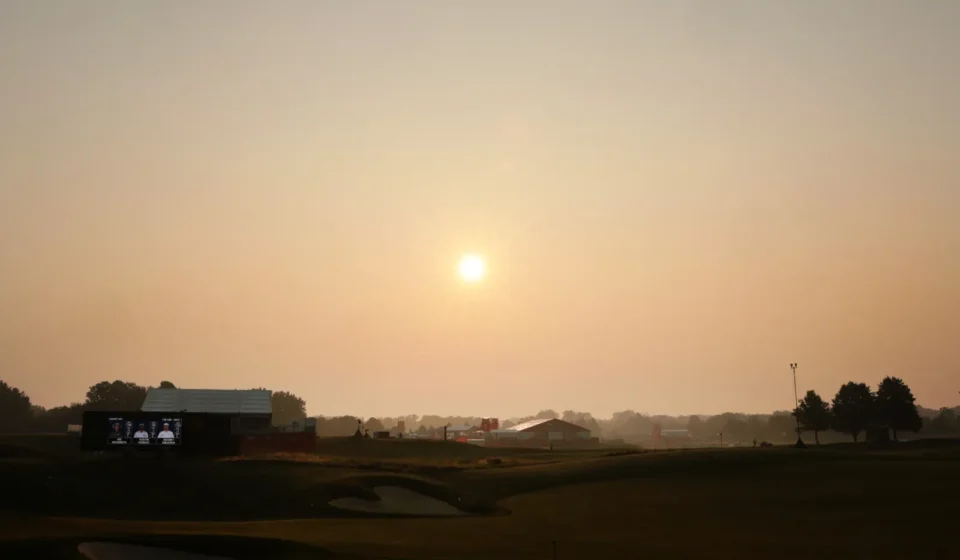

Canadian Wildfire Smoke has spread across the U.S.-Canada border, causing deteriorating air quality in several American states as massive wildfires continue to burn across parts of Canada. Health officials have issued air quality advisories, urging residents in affected areas to limit outdoor activities, particularly those with respiratory conditions, older adults, and young children.
Meteorologists say changing wind patterns have carried dense smoke hundreds of miles south, reducing visibility and increasing concentrations of fine particulate matter in the atmosphere. The cross-border impact highlights how large wildfire events can affect communities far beyond the immediate fire zones.
Canadian Wildfire Smoke Triggers Air Quality Alerts
The Canadian Wildfire Smoke plume has affected several northern and northeastern U.S. states, with air quality ranging from moderate to unhealthy in some locations. Environmental agencies continue to monitor smoke movement using satellite imagery and atmospheric forecasting models.
Fine particulate matter, commonly known as PM2.5, is one of the primary health concerns associated with wildfire smoke. These microscopic particles can penetrate deep into the lungs and even enter the bloodstream, increasing the risk of respiratory and cardiovascular problems.
Authorities have advised people in affected areas to remain indoors when possible, keep windows closed, and use air filtration systems if available. Individuals who must spend extended periods outdoors are encouraged to monitor local Air Quality Index (AQI) updates and take appropriate precautions.
Key Details and Health Recommendations
Air quality alerts have been issued in multiple regions where smoke concentrations have reached elevated levels. While conditions vary by location, officials warn that even healthy individuals may experience irritation of the eyes, nose, and throat during periods of dense smoke.
Public health agencies recommend that people with asthma, chronic obstructive pulmonary disease (COPD), heart disease, or other underlying health conditions avoid strenuous outdoor activities until air quality improves.
Schools, sports organizations, and outdoor event organizers are also monitoring local AQI forecasts, with some communities modifying or postponing outdoor activities during periods of poor air quality.
Emergency management agencies continue working with meteorological services to provide timely updates as smoke conditions shift with changing weather patterns.
Background and Context
Canada has experienced increasingly severe wildfire seasons in recent years, driven by prolonged drought, high temperatures, and dry vegetation. Large fires can produce enormous smoke plumes that travel thousands of miles under favorable atmospheric conditions.
Because the United States and Canada share extensive geographic boundaries, smoke from major Canadian wildfires frequently affects northern U.S. states. Depending on wind direction and weather systems, smoke can spread as far south as the Midwest, the Great Lakes region, and even parts of the East Coast.
Climate scientists have noted that rising global temperatures are contributing to longer and more intense wildfire seasons across North America. Extended periods of hot, dry weather create ideal conditions for wildfires to ignite and spread rapidly, increasing the likelihood of widespread smoke events.
Environmental experts also emphasize that wildfire smoke has become a growing public health concern, with repeated exposure potentially affecting millions of people during active fire seasons.
What Happens Next?
Meteorologists will continue tracking the movement of the Canadian Wildfire Smoke as weather systems evolve over the coming days. Air quality conditions are expected to fluctuate depending on wind direction, rainfall, and ongoing wildfire activity in Canada.
Firefighters remain engaged in suppressing active wildfires while provincial and federal agencies coordinate emergency response efforts. Until significant rainfall or cooler weather helps slow fire activity, smoke is likely to continue affecting parts of both Canada and the United States.
Residents are encouraged to monitor local air quality forecasts, follow guidance from public health authorities, and reduce outdoor exposure whenever smoke levels become unhealthy.
Conclusion
The spread of Canadian Wildfire Smoke into the United States underscores the far-reaching impact of increasingly severe wildfire seasons across North America. As firefighters continue battling major blazes in Canada, millions of Americans may experience periods of reduced air quality and health risks associated with wildfire smoke. Officials continue to monitor conditions closely, urging the public to stay informed and take appropriate precautions until air quality improves.
- Joe Biden’s Cancer Has Spread Further, Hunter Biden Says
- Daylight Saving Time Explained: Why Clocks Change Every Year
- Trump Pushes for Daylight Saving Time as Clock Change Nears
- Spanish Enclave Ceuta Sees 60,000 Migrant Arrivals Within a Day
- FIFA Speeds Up 64-Team World Cup Plans Amid Gianni Infantino Sell-Off Proposal