Grandfather Hospitalized After Yellowstone Bison Attack Sends Him Flying 8 Feet

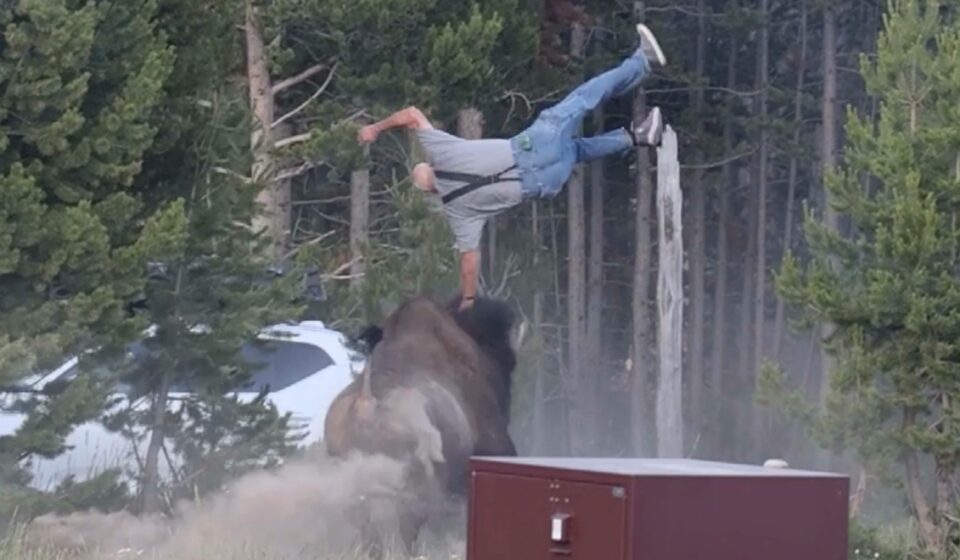
A Yellowstone Bison Attack left a grandfather hospitalized after the massive animal charged and tossed him approximately eight feet into the air during an encounter at Yellowstone National Park. Park officials said emergency responders quickly arrived at the scene and transported the injured visitor to a nearby medical facility for treatment.
The incident has renewed concerns about visitor safety in one of the United States’ most popular national parks, where millions of people travel each year to observe wildlife in its natural habitat. Authorities continue to remind visitors that bison, despite their calm appearance, are wild animals capable of moving with remarkable speed and force.
Yellowstone Bison Attack Leaves Visitor Injured
The Yellowstone Bison Attack occurred after the visitor reportedly came too close to the animal, according to preliminary information released by park officials. Witnesses said the bison suddenly charged before striking the man, lifting him off the ground and throwing him roughly eight feet.
Emergency medical personnel responded shortly after the incident. The injured grandfather was evaluated at the scene before being taken to a hospital. Officials have not publicly disclosed the full extent of his injuries, but confirmed that he required medical treatment.
The National Park Service has launched an investigation into the incident to determine the exact circumstances surrounding the encounter.
Key Details and Official Response to the Yellowstone Bison Attack
Park rangers once again emphasized that visitors should never approach or attempt to interact with wildlife inside Yellowstone National Park.
According to National Park Service guidelines, visitors should remain at least 25 yards (23 meters) away from bison and other large animals, including elk, deer, and moose. A minimum distance of 100 yards (91 meters) is recommended for predators such as bears and wolves.
Officials noted that bison can appear slow and docile but are capable of running at speeds of up to 35 miles per hour (56 km/h)—significantly faster than the average person. They can become aggressive if they feel threatened or if visitors invade their personal space.
The park urged visitors to remain on designated boardwalks and trails where appropriate and to move away immediately if wildlife approaches.
Background and Context
Yellowstone National Park is home to the largest free-ranging bison population in the United States. These animals are among the park’s most iconic attractions and draw thousands of photographers and tourists each year.
Despite repeated safety campaigns, bison-related injuries continue to occur almost every year. Many incidents involve visitors who move too close while attempting to take photographs or observe the animals at close range.
Wildlife experts stress that bison are unpredictable and can react quickly when they perceive danger. During mating season or when protecting calves, they may become especially defensive.
The National Park Service regularly reminds visitors that Yellowstone is not a zoo and that all wildlife should be viewed from a safe distance using binoculars or zoom camera lenses rather than approaching animals directly. Video link
What Happens Next?
Park officials are continuing to review witness statements and any available video footage to better understand the circumstances leading to the attack.
The injured visitor is expected to continue receiving medical care, while the bison involved will likely remain in the wild unless officials determine that unusual circumstances warrant further action. In most wildlife encounters, the focus of investigations is on visitor behavior rather than the animal itself.
Meanwhile, the National Park Service is expected to reinforce public safety messaging throughout the busy tourist season, encouraging visitors to respect wildlife viewing distances and follow park regulations designed to prevent similar incidents.
Conclusion
The Yellowstone Bison Attack that sent a grandfather flying approximately eight feet serves as another reminder of the risks associated with approaching wild animals. While Yellowstone offers visitors a rare opportunity to observe wildlife in its natural environment, park officials emphasize that maintaining a safe distance remains essential for protecting both people and animals. As investigations continue, authorities hope the incident will reinforce the importance of following established wildlife safety guidelines during visits to the park.
- Joe Biden’s Cancer Has Spread Further, Hunter Biden Says
- Daylight Saving Time Explained: Why Clocks Change Every Year
- Trump Pushes for Daylight Saving Time as Clock Change Nears
- Spanish Enclave Ceuta Sees 60,000 Migrant Arrivals Within a Day
- FIFA Speeds Up 64-Team World Cup Plans Amid Gianni Infantino Sell-Off Proposal