
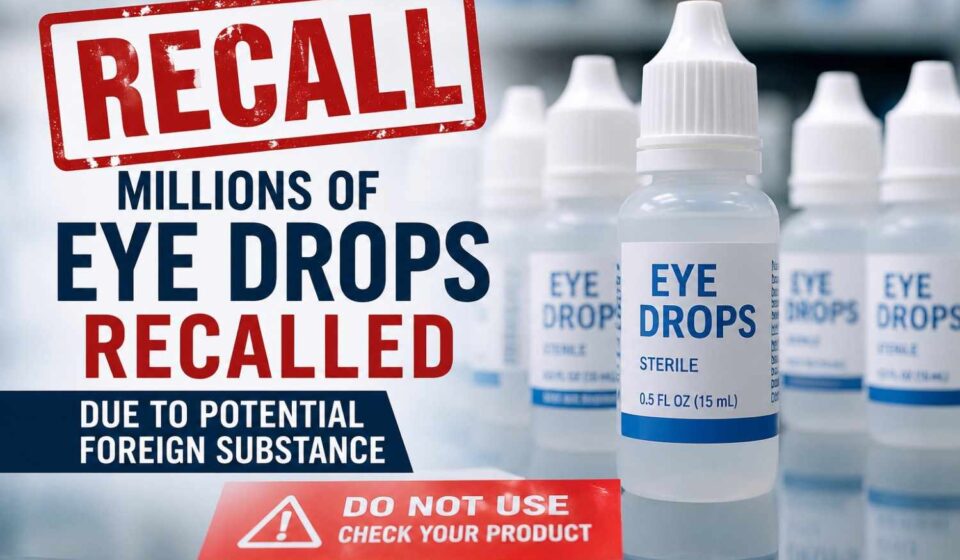
Eye Drops Recall: Millions of Products Recalled Nationwide Over Potential Foreign Substance

Millions of eye drop products are being pulled from shelves across the United States following an Eye Drops Recall prompted by concerns that some units may contain a potential foreign substance. The nationwide action has raised fresh attention to pharmaceutical quality control and product safety, with consumers urged to check whether they have affected products and follow official recall instructions.
The recall was initiated as a precautionary measure after the possible presence of foreign material was identified during quality assurance processes. While no widespread injuries have been publicly linked to the issue at the time of the announcement, health officials and the manufacturer are encouraging consumers to stop using the recalled products immediately and seek replacements or refunds where available.
Eye Drops Recall: Main Development
The Eye Drops Recall involves millions of units distributed through pharmacies, retail chains, and online marketplaces across the country. According to the recall notice, the concern centers on the possible presence of a foreign substance in certain eye drop bottles.
Foreign materials in sterile ophthalmic products can present a health risk because eye drops are applied directly to the eye. Depending on the nature of the contamination, users could experience irritation, inflammation, infection, or other complications. Healthcare professionals generally advise patients to discontinue use of any recalled sterile product until further guidance is available.
Manufacturers routinely conduct quality testing before products reach consumers. However, recalls may still occur when issues are discovered during post-production monitoring, customer complaints, or additional inspections. In this case, the recall is intended to prevent any potential health risks while the matter is investigated.
Consumers are advised to identify the affected product by checking the lot number, expiration date, and packaging details included in the official recall notice. Products matching the recalled information should not be used.
Eye Drops Recall: Key Details and Reactions
The manufacturer said the recall is being conducted voluntarily in cooperation with U.S. regulatory authorities as part of established pharmaceutical safety procedures.
Regulators emphasized that recalls do not necessarily indicate that every unit is defective. Instead, they are designed to remove potentially affected products from circulation as quickly as possible while investigations continue.
Healthcare providers recommend that anyone who has used the recalled eye drops and experiences symptoms such as persistent eye pain, redness, swelling, blurred vision, discharge, or changes in vision should seek prompt medical attention.
Pharmacies and retailers are also notifying customers through in-store notices, email alerts, and online recall listings where applicable. Many retailers have begun removing affected inventory from shelves to prevent additional sales.
Industry experts note that recalls involving sterile ophthalmic products are treated with particular caution because contamination can carry greater risks than with many other over-the-counter products.
Background and Context of the Eye Drops Recall
The latest Eye Drops Recall follows heightened regulatory scrutiny of ophthalmic products in recent years after several high-profile recalls involving contamination concerns.
Sterile eye care products are manufactured under strict quality standards intended to minimize contamination risks. Even small deviations during production, packaging, or transportation can result in recalls if product integrity cannot be guaranteed.
The U.S. Food and Drug Administration routinely monitors pharmaceutical manufacturing facilities and works with manufacturers to oversee voluntary recalls when potential quality issues arise. Companies may also initiate recalls independently after discovering manufacturing irregularities through internal testing.
Consumer awareness has increased following previous recalls involving eye care products, prompting many healthcare professionals to encourage patients to verify product safety notices before using medications that come into direct contact with the eyes.
Experts stress that recalls are an important part of the pharmaceutical safety system. While they may temporarily inconvenience consumers, they are designed to prevent more serious health outcomes by removing potentially affected products before widespread harm occurs.
What Happens Next After the Eye Drops Recall?
The manufacturer is expected to continue investigating the source of the potential foreign substance while working with regulators to determine the full scope of the issue.
Additional testing may be conducted to identify how the material entered the production process and whether manufacturing procedures require further corrective action. Regulatory agencies will monitor the company’s response and may conduct follow-up inspections if necessary.
Consumers who purchased the recalled eye drops should review official recall information carefully, stop using affected products, and follow return or disposal instructions provided by the manufacturer or retailer. Individuals with questions are encouraged to contact the company’s customer service or consult their healthcare provider.
Medical professionals also advise patients not to substitute prescription eye medications without speaking to their doctor, as alternative treatments may be needed depending on the underlying condition being treated.
The investigation remains ongoing, and further updates could be issued if additional lots or products become affected or if new findings emerge from the quality review.
Conclusion
The nationwide Eye Drops Recall underscores the importance of pharmaceutical quality control and consumer vigilance. Although the recall was initiated as a precaution and no widespread injuries have been confirmed publicly, authorities are urging consumers to stop using affected products and verify whether their purchases are included in the recall.
As investigations continue, manufacturers, regulators, healthcare providers, and retailers are working to remove potentially affected products from circulation and provide updated guidance. Consumers are encouraged to stay informed through official recall notices and seek medical advice if they experience any unusual symptoms after using recalled eye drops.
- Joe Biden’s Cancer Has Spread Further, Hunter Biden Says
- Daylight Saving Time Explained: Why Clocks Change Every Year
- Trump Pushes for Daylight Saving Time as Clock Change Nears
- Spanish Enclave Ceuta Sees 60,000 Migrant Arrivals Within a Day
- FIFA Speeds Up 64-Team World Cup Plans Amid Gianni Infantino Sell-Off Proposal